
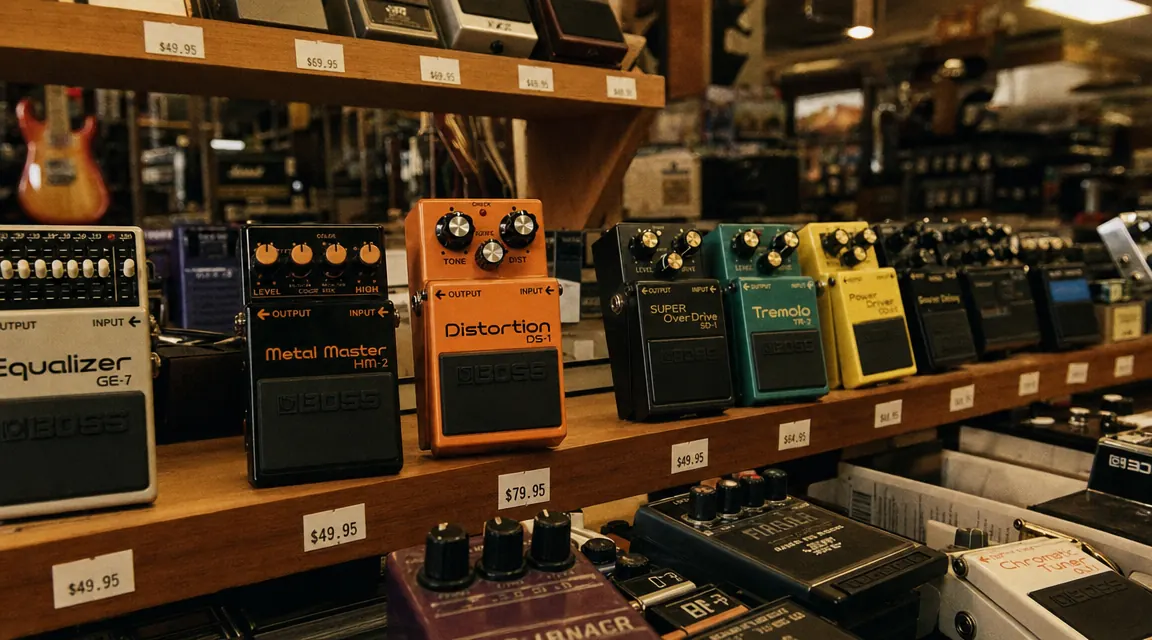
The year was 1998. I was sixteen, and the Sam Goody in our local mall had just been replaced by a Guitar Center. Or maybe it was the other way around. Honestly, I just remember the smell: new carpet, soldering flux, and the faint ghost of someone playing a Metallica riff on a Mesa Boogie they couldn't possibly afford. My buddy Trevor had dragged me in because he wanted to look at drum kits. I never made it past the pedal wall.
I had maybe $80 saved from two weekends of mowing lawns. I'd been playing guitar for about a year on my dad's old Stratocaster copy, running it into a little Peavey Rage practice amp that buzzed constantly and smelled faintly of something burning. It got louder when I hit chords hard. That was the extent of my tone knowledge. I didn't know what gain was. I didn't know what EQ meant. I just knew that whatever Kurt Cobain and Slash were doing with their sound, I was not doing it, and the distance between their tone and mine felt impossible to close.
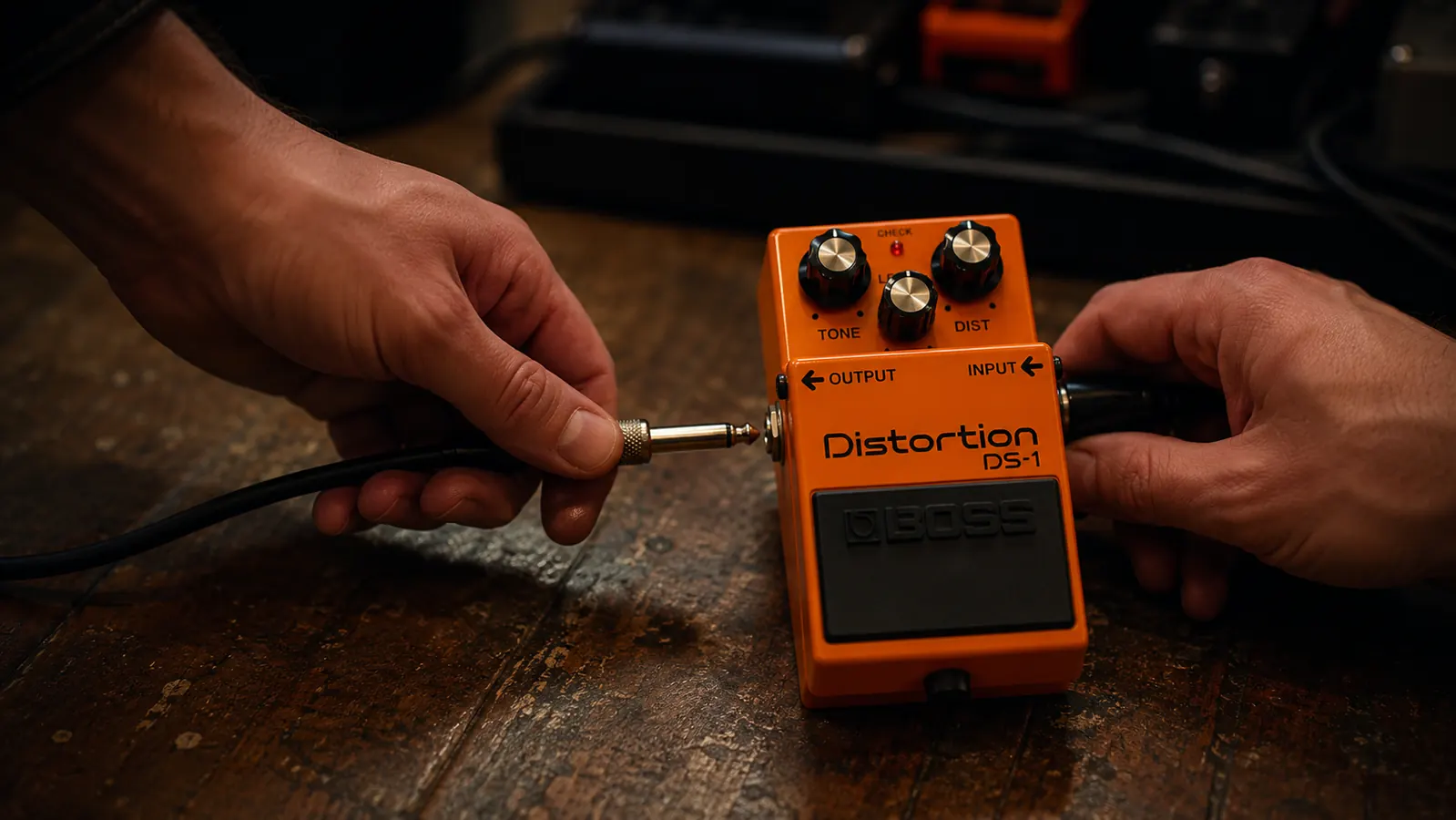
Then I saw the Boss DS-1. Orange. Compact. $69.99 on the tag. I picked it up. The salesman, a guy in his twenties with a Les Paul Studio on his back like a holster, told me it was what Kurt actually used. Whether that was true or not, I was sold in about fifteen seconds. I bought it with every dollar I had, walked out into the mall with my heart pounding, and spent the rest of that afternoon on Trevor's basement floor figuring out how to plug it into the Peavey.
What happened when I finally got it set up and hit an E chord is hard to put into words without sounding ridiculous. The amp stopped buzzing and started roaring. Not a big roar, not a Marshall-stack roar, but something real. Something that felt intentional. I sat there for probably three hours just hitting that one chord, adjusting the Dist knob by millimeters, listening to what changed. That afternoon was the moment I understood that the sound inside your head isn't some impossible dream. It's a dial you can actually turn.
That afternoon was the moment I understood that the sound inside your head is not some impossible dream. It is a dial you can actually turn.
The Same Pedal. The Same Orange Box. Still $70.
The Boss DS-1 has been in continuous production since 1978. Over 4,300 Amazon reviewers give it 4.6 stars. If you're chasing that first real rock tone, this is where most of us started.
Amazon Check Today's Price on Amazon →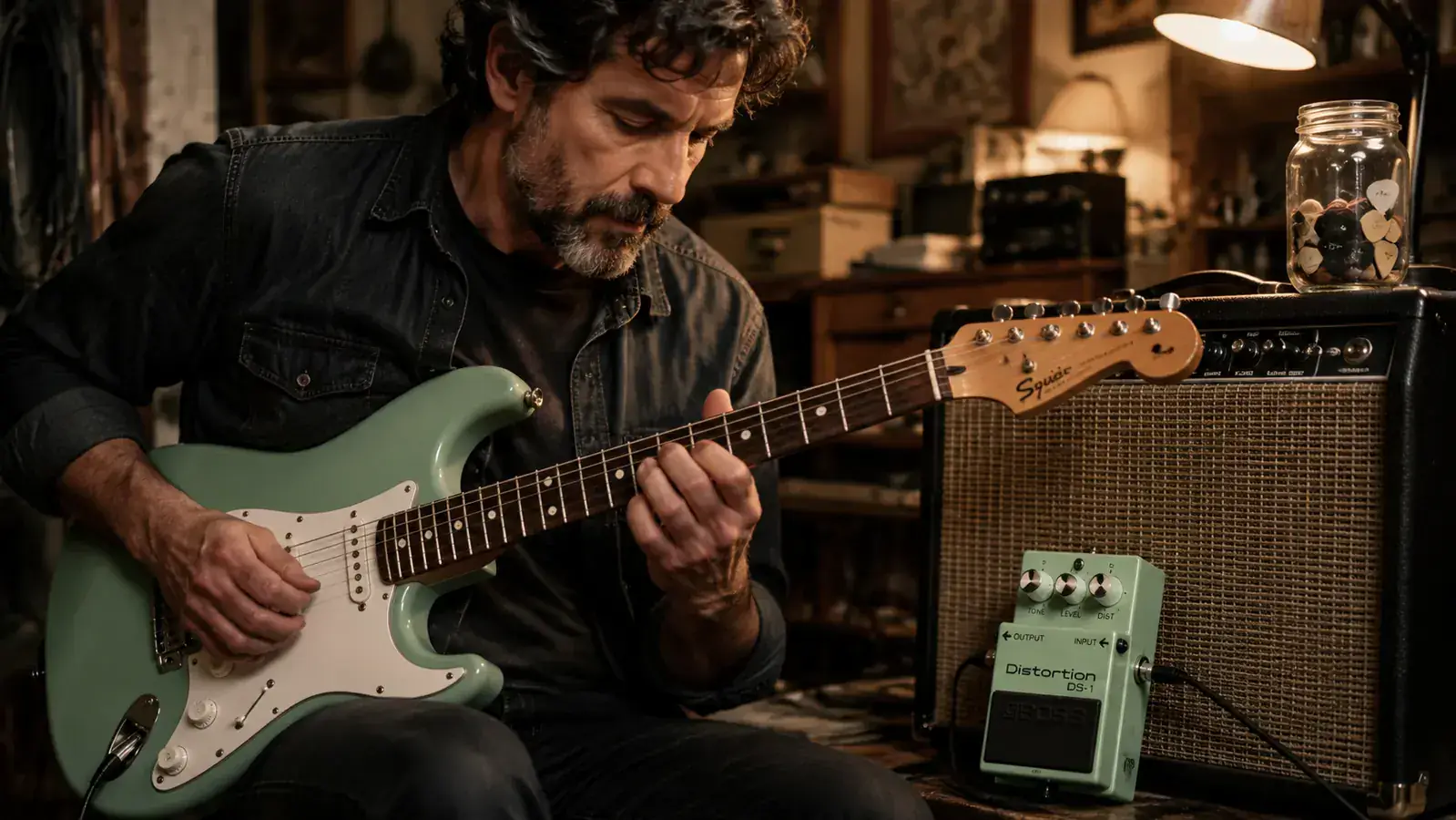
What I didn't know then, standing in that basement at sixteen, was that the DS-1 had just written the first chapter of a very long story. Over the next twenty years I would buy and sell probably sixty pedals. I went through a boutique overdrive phase in my mid-twenties that cost me more money than I care to admit. I had a whole year where I convinced myself I needed a different fuzz for every decade of rock I was trying to cover. I owned three different wah pedals simultaneously once. I still don't fully understand why.
Through all of it, the DS-1 kept coming back. I sold my first one to pay for a MXR Phase 90 I wanted. I bought another one two years later when I realized the Phase 90 was great but I still needed something that actually made the amp scream. That second one got stolen out of a van at a gig in 2006. I bought a third one within a week because I couldn't function without it. The fourth one, bought in 2014, is still on my main board right now, held down with gaffer tape because the velcro backing finally gave out.
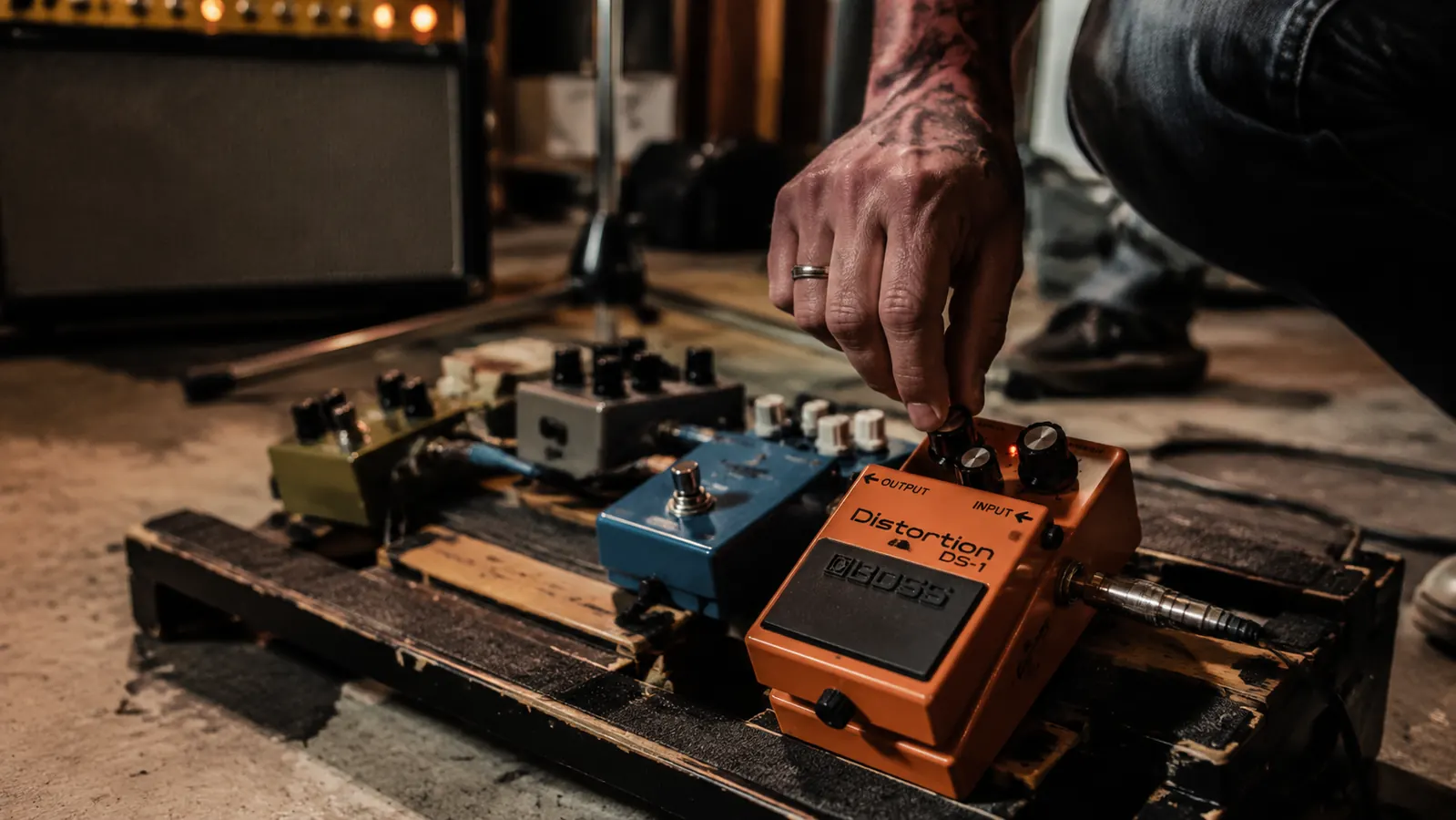
I've played through Marshalls and Fenders, through a vintage Vox AC30 I borrowed from a friend for six months, through a Bogner combo that I briefly thought would finally end my tone-chasing. None of those amps made me stop wanting. But the DS-1 underneath all of them just kept working. It doesn't pretend to be a boutique pedal. It doesn't have a story about hand-wired point-to-point circuitry or a rare NOS germanium transistor. It's a $70 box made in Taiwan and it does exactly what it says on the label. For a certain kind of guitarist, that bluntness is the whole point.
The thing I never expected is that the tone obsession the DS-1 kicked off would become something I'm genuinely grateful for. It pushed me to understand how gain staging works, how your pick attack interacts with a compressed signal, how room acoustics change everything at higher volumes. All of that started with one afternoon in a basement trying to figure out why my chord sounded different when I rolled the Tone knob left. I've read more about guitar amplification than I've read about most things I use every day. That's the DS-1's fault, and I mean that as a compliment. For my full technical breakdown of how the pedal actually sounds across different amp types, see my long-term DS-1 review. If you want to know how it pairs with a modern modeling amp, the Boss Katana review covers that combination in detail.
What I'd Tell You If We Were Sitting at My Kitchen Table
If you're a new player standing in front of a pedal wall right now, or scrolling through Amazon at midnight trying to figure out your first dirt pedal, here's the honest version: you're going to overthink this. I did, and I had far less information than you do. The DS-1 is not the most sophisticated distortion pedal ever made. There are boutique options with more tonal complexity, smoother clipping, more musical response at high gain levels. At some point, if you get deep into this hobby, you'll find one you like better. But right now, none of that matters. What matters is that you put something in the signal chain that sounds like a rock guitar, crank the amp a little, and play. The DS-1 lets you do that for $70 without requiring you to understand anything first. That's actually rare. Most gear that sounds genuinely good requires setup knowledge you don't have yet. This pedal doesn't. You plug in, you dial up, and you go. The rest of the education happens while you're playing. That's the only way it works anyway.
If You're Ready to Stop Thinking and Start Playing
The Boss DS-1 is the same pedal that launched a thousand pedalboards. 4.6 stars across more than 4,300 reviews. Boss has been making this exact box since 1978 for good reason.
Amazon Check Today's Price on Amazon →