
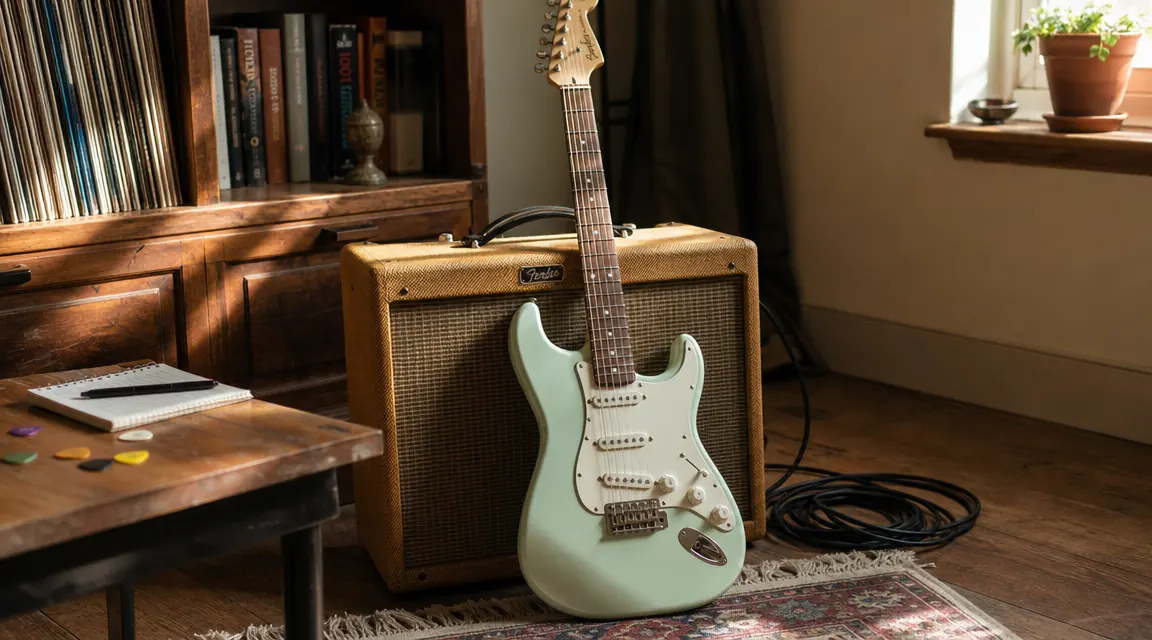
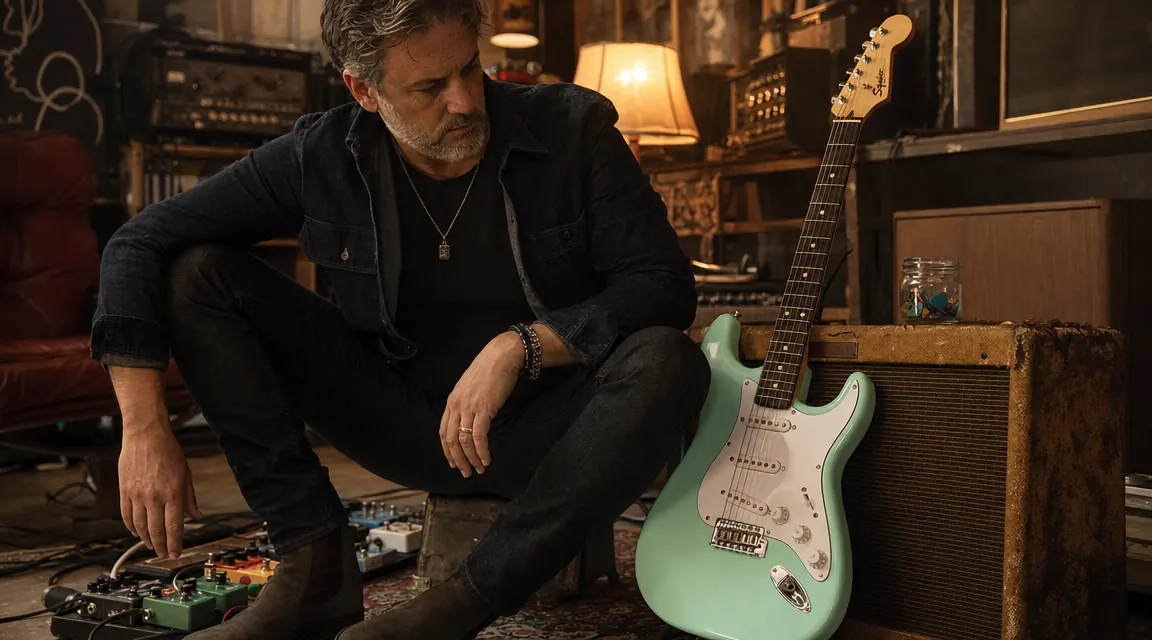
Here is the situation I found myself in last November: I needed a reliable backup Strat for the small bar gigs my band plays on weekends, something that would not make me wince if it got dinged loading in through a tight doorway, but would still hold up onstage against a Fender Blues Junior and a Boss DS-1 chain. My main guitar at the time was a 2018 American Professional Stratocaster, and I was not about to let that thing take the abuse. So I started looking at the $300-$500 range, fully expecting to hold my nose and settle. What I found instead was the Squier Classic Vibe '50s Stratocaster, and it has been sitting in the number-one spot on my guitar stand ever since.
That is not a statement I make lightly. I have been playing for over 30 years. I own eleven guitars including two American Fenders, a Gibson Les Paul Standard, a PRS SE Custom 24, and a few oddities picked up on tour years ago. I have owned and sold more guitars than I care to count. When I tell you a guitar at this price point surprised me, I mean it in the specific way that surprises you when a $14 bottle of wine beats the $60 one at the same dinner table.
The Quick Verdict
The best sub-$400 electric guitar you can buy right now, full stop. Plays better than it has any right to, sounds genuinely good through a decent amp, and holds up to real gigging. The stock tuners and nut are the only things you will want to upgrade eventually.
Amazon Check Today's Price →Done overthinking? This is the Strat that outplays its price every single night.
The Squier Classic Vibe '50s Stratocaster is available on Amazon with Prime shipping. Check the current price before it moves.
Amazon Check Today's Price on Amazon →How I Have Used It Over Six Months
From November through April I played this guitar at fourteen bar and venue gigs ranging from 80-person rooms to a 300-seat theater fundraiser. I also used it in roughly three weekly rehearsals with my band, a few solo recording sessions in my home studio running through a UAD Apollo interface and Neural DSP amp sims, and a lot of late-night bedroom noodling through a Fender Blues Junior at low volume. That is the full picture: gig volume, recording level, and 1am apartment-friendly whisper volume. A guitar tells you different things at each of those contexts, and the Classic Vibe handled all three without complaint.
I kept the guitar completely stock for the first four months. No swap-outs, no upgrades. I wanted to know what the thing actually was before I started polishing it. At month five I put on a fresh set of D'Addario EXL110 10-46s and did a basic setup: saddle height, intonation, truss rod adjustment. That is the only work it has had. The nut is still stock, the tuners are still stock, and the pickups are still stock.
The Neck and Feel: Where Squier Gets It Right
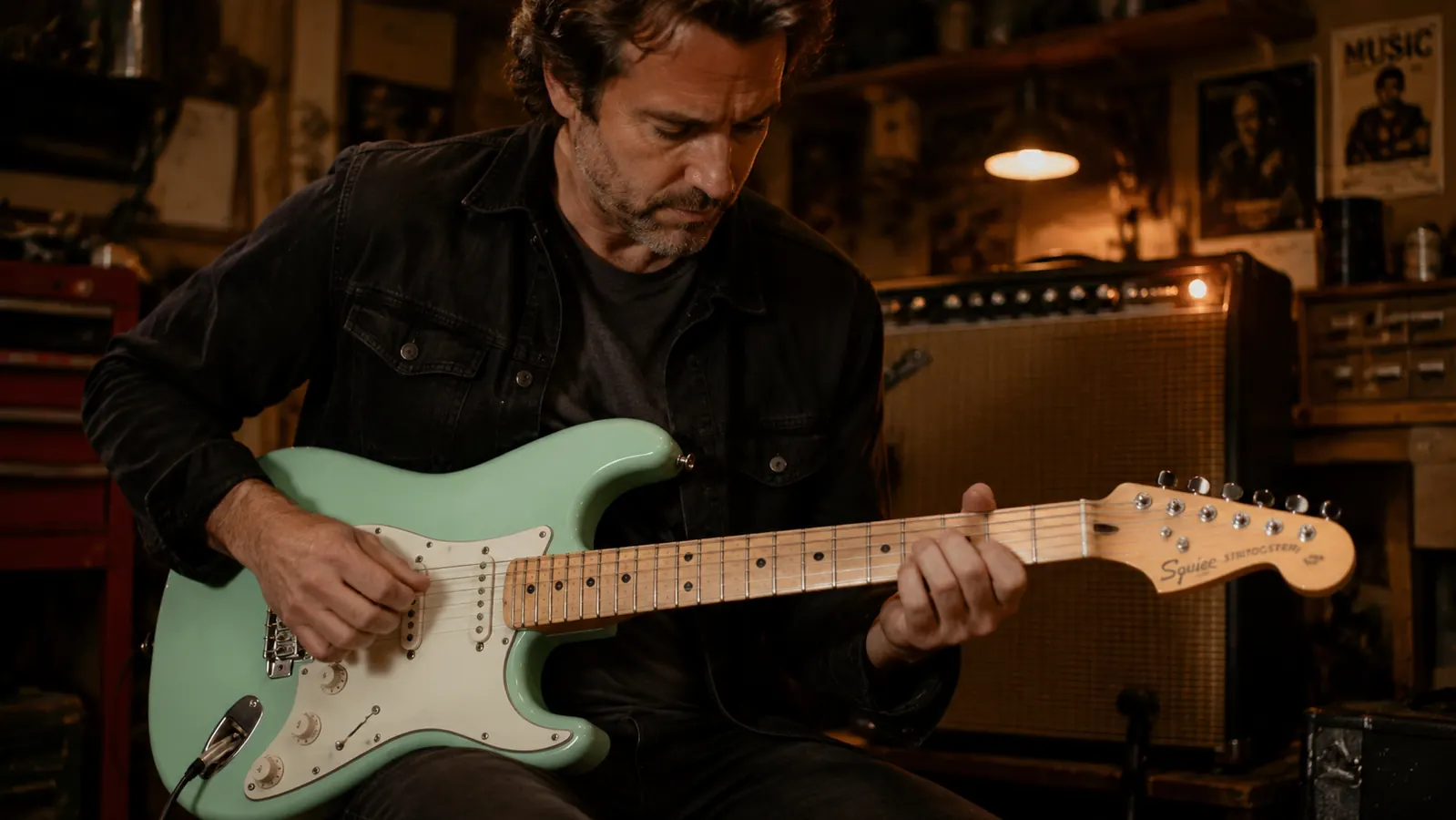
The Classic Vibe '50s has a maple neck with a 9.5 inch radius and a C-shape profile that Fender calls 'vintage-tinted.' That is a nice way of saying it is slightly chunkier than a modern Fender C-shape, closer in feel to a late-1950s Strat than to the thin, fast necks on modern American Professionals. If you are a speed-metal player looking for a Wizard profile, this is not your guitar. If you are a classic rock player who wants something that feels broken-in and substantive in the hand, it is exactly right.
The frets are medium-jumbo, which I prefer for bending. The fretwork out of the box was genuinely impressive for the price. I have played $700 guitars with worse fret ends. No sharp fret sprout on the edges, no high spots that choked bends up high on the neck. The nut slots were a little high from the factory, which is typical, and a quick nut filing would get the action even better at the first and second frets. That is a five-minute job for any guitar tech. It is not a flaw, it is a standard factory setup issue you see on every guitar at every price.
The gloss maple fingerboard plays fast without feeling slippery. After six months of sweaty gig nights it has developed a slight warmth that is not quite vintage wear but is heading in that direction. The neck joint is tight and the neck plate sits flush. Zero rattle, zero movement.
The Pickups: Alnico V Single Coils That Actually Sound Like a Strat
This is where budget guitars usually fall apart. Cheap pickups sound thin, or harsh, or fizzy through anything but a perfectly dialed amp. The Classic Vibe '50s uses alnico V single coils that Fender designed specifically for this series, and they sound like a real Stratocaster. Not a Stratocaster impression. An actual Strat.
The bridge pickup has the bite and quack you want for classic rock riffing. Through my Blues Junior with the treble backed off and a Boss DS-1 in front, it gets a convincing AC/DC-adjacent crunch without getting spiky or unpleasant. The neck pickup is warm and round, good for SRV-style blues runs and anything that needs a vocal quality. Position 2 and 4 on the 5-way switch give you that classic Strat out-of-phase shimmer, which sounds as close to the real thing as I have heard on a guitar at this price.
At bedroom volume through a small amp, they are detailed and articulate. At gig volume through the Blues Junior pushed a little hot, they open up in a way that makes you feel like the room is responding to the guitar. That responsiveness is hard to quantify but easy to hear. It is the difference between a guitar that just makes sounds and one that actually rewards how you play.
Through my Blues Junior with a DS-1 in front, the bridge pickup gets a convincing AC/DC crunch without turning spiky. That is not something I expected from a $400 Squier.
The Hardware: Mostly Solid, With Two Honest Weak Points
The body is solid alder, which is correct for a Strat and sounds right. The Surf Green finish on my example is clean and even, with no orange peel or fisheye in the clear coat. The chrome hardware looks good out of the box.
Now for the two things that will eventually annoy you. First, the vintage-style tuning machines. They work, they hold tune reasonably well through a gig, but they are not as smooth or precise as even a mid-range set of Grovers or Gotoh vintage-style tuners. After four months of regular use I noticed slightly more dead spot in the tuner action. Nothing that makes the guitar unplayable, but if you are going to keep this guitar long-term, a set of Gotoh SD91 Keystone tuners (around $40 a set) is a smart upgrade that takes 20 minutes and transforms the tuning feel.
Second, the plastic nut. It is a bone-colored synthetic nut that gets the job done but has slightly inconsistent slot depths from the factory. As I mentioned, the setup improved after a quick filing adjustment. If you want zero slippage and butter-smooth string travel, a genuine bone nut is a $25-$30 upgrade at any guitar shop. Both of these upgrades together cost less than $70 and make this guitar punch noticeably above its weight. But they are not required to gig the guitar. I played it for four months with the stock everything and it never let me down on a gig.
Gig Volume vs. Bedroom Volume: A Real Distinction
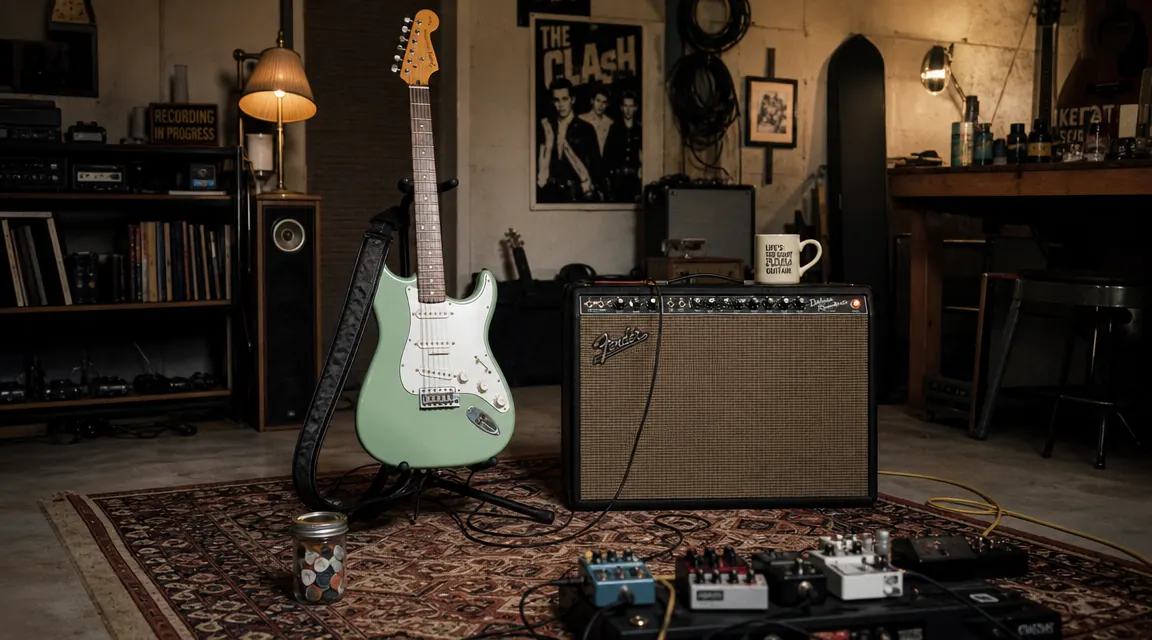
Not every guitar sounds the same at both volumes. Some instruments feel tight and controlled in a bedroom but come alive at stage volume. Others sound huge in your practice room and thin out when you are competing with a drummer and a bass amp. The Classic Vibe '50s is one of the genuinely well-balanced guitars I have played: it holds its character across the volume range.
At bedroom volume through my Blues Junior at 1-2 on the dial, the midrange is present without being nasal, the highs are detailed without being glassy. At gig volume with the master at 5-6, the guitar rewards harder picking dynamics in a way that makes me play better. I can work the volume knob on the guitar itself and get real tonal variation, something not all budget guitars pull off convincingly.
I also ran it through a borrowed Marshall DSL40 at one outdoor gig, cranked to 5. The neck pickup through that amp at gig volume is genuinely beautiful. Warm, complex, not too compressed. My guitarist buddy who plays a Highway One Strat kept coming over between sets to play a chord or two on it. That is either a strong endorsement or a sign I need to keep better watch on my gear.
What I Liked
- Neck feel and fretwork are excellent for the price, on par with guitars twice the cost
- Alnico V pickups sound like a real Stratocaster through a decent amp, not a cheap impression
- Solid alder body with correct Strat resonance and sustain
- Holds up to real gig use including loading in/out, temperature swings, and long sets
- Plays well at both bedroom and stage volume with consistent tonal character
- Surf Green finish quality is clean and even, looks great under stage lights
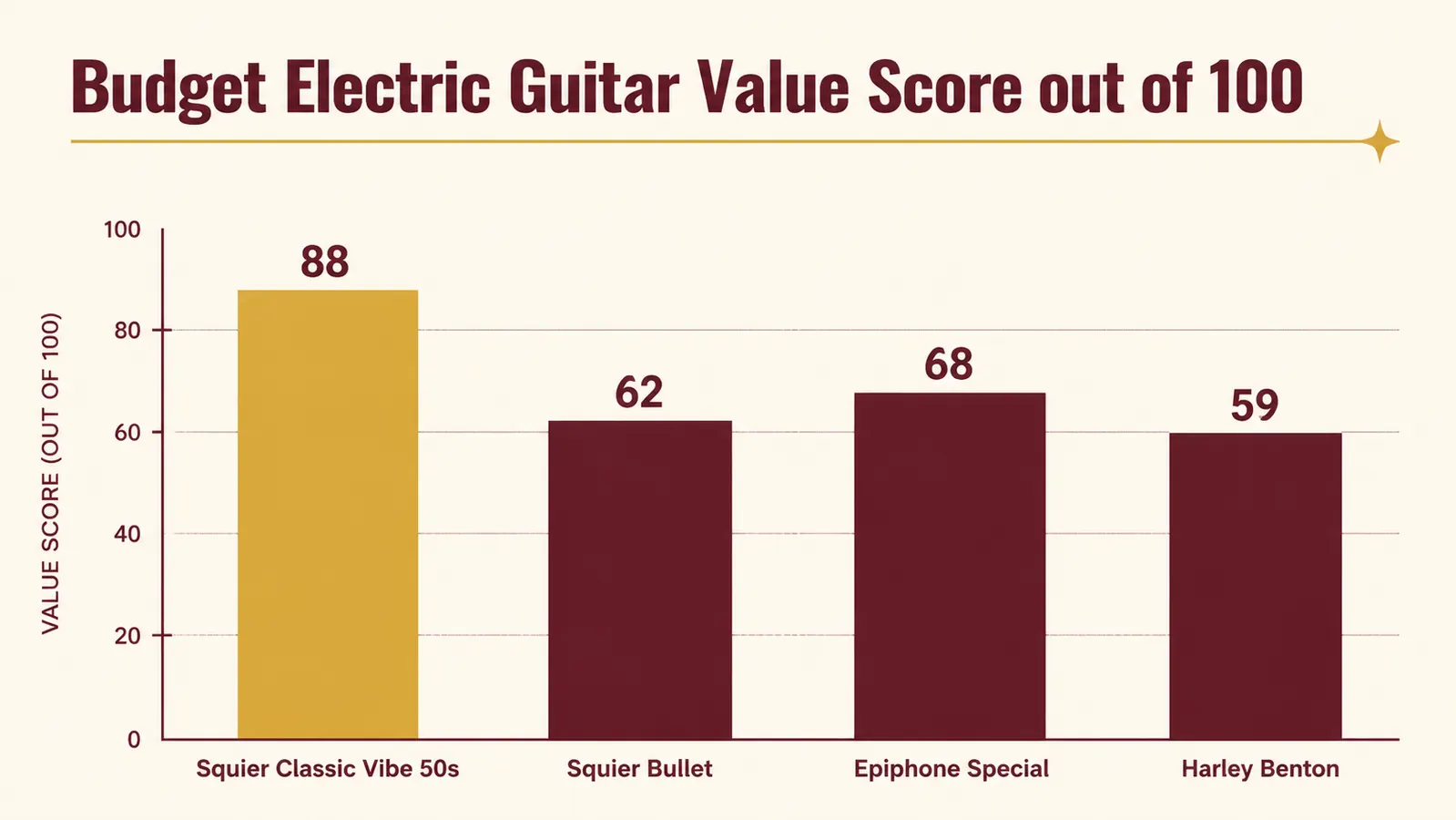
- Strong value at current price; easily competes with guitars in the $600-$700 range
Where It Falls Short
- Stock vintage-style tuners are functional but not as smooth as aftermarket options
- Factory nut slots run slightly high and benefit from a basic filing adjustment
- No locking nut or locking tuners, so heavy tremolo use will cause tuning drift
- Gloss maple neck will show wear faster than a satin finish in the same conditions
- The trem arm included is a bit loose in the block out of the box
How It Compares to More Expensive Guitars I Own
I want to be specific here because vague praise is useless. Compared to my American Professional Stratocaster, the Classic Vibe '50s has slightly less pickup clarity and a little less sustain through the same amp. The tonal difference is real. You can hear it on a recording if you know what to listen for. The American Pro neck is slightly more comfortable for long sessions. At gig volume through a PA and with a band playing around you, the gap narrows considerably. The Classic Vibe sounds like a Strat. The audience hears a Strat. Whether the guitarist hears the $700 gap is a personal call.
Compared to a Mexican-made Fender Player Stratocaster, which runs $100-$150 more than the Classic Vibe, the comparison is genuinely close. I prefer the Classic Vibe's neck profile for rhythm playing and think the alnico V pickups are slightly warmer and more complex than the Player Series alnico V pups. Others might disagree. Both are solid guitars. The Classic Vibe wins on value, the Player Strat wins on the Fender headstock logo if that matters to you. It does not matter to me on a gig, but I understand it matters to some players.
Who This Is For
The Squier Classic Vibe '50s Stratocaster is the right guitar if you are a serious player on a budget who needs a real instrument that can take real gigging punishment. It is also the right guitar if you want a dedicated backup to a more expensive Strat without spending another $700 on a second American series. It is right for classic-rock-focused players who want Strat tones specifically: that bridge pickup quack, that neck pickup warmth, that position-4 shimmer. It is right for recording players who want an instrument that will sound correct running into a real amp or an amp sim without needing an aggressive EQ correction. If you are learning, it is an investment in a real instrument that will still be worth owning when you have moved past the beginner stage.
Who Should Skip It
If you are a metal player who needs high-output humbuckers and a locking tremolo system, this is the wrong guitar. The single-coil pickups will pick up 60-cycle hum in noisy club environments, which is a fact of Strat life and not a Squier-specific problem, but it is still relevant if you play high-gain metal where that hum becomes a real issue. If you absolutely need the Fender logo on the headstock for professional or psychological reasons, look at the Player Stratocaster series instead. And if you are a tremolo-heavy player who dives hard and expects to come back perfectly in tune, you will need locking tuners at minimum. The vintage-style trem on this guitar is not set up for aggressive whammy bar use without some modification.
Also worth mentioning: if your budget can stretch to a used American-made Fender from the late 1990s or early 2000s, that is also worth considering. But at current used guitar prices, a clean American Strat from that era often runs $600-$900. At that spread, the Classic Vibe is the easier call for players who want a reliable, great-sounding guitar without the hunting-and-waiting of the used market.
Six months of gigging says this Strat belongs on every serious player's shortlist.
The Squier Classic Vibe '50s Stratocaster holds up onstage, sounds right at bedroom volume, and costs less than a MIM Fender. Check the current price on Amazon while stock is solid.
Amazon Check Today's Price on Amazon →