
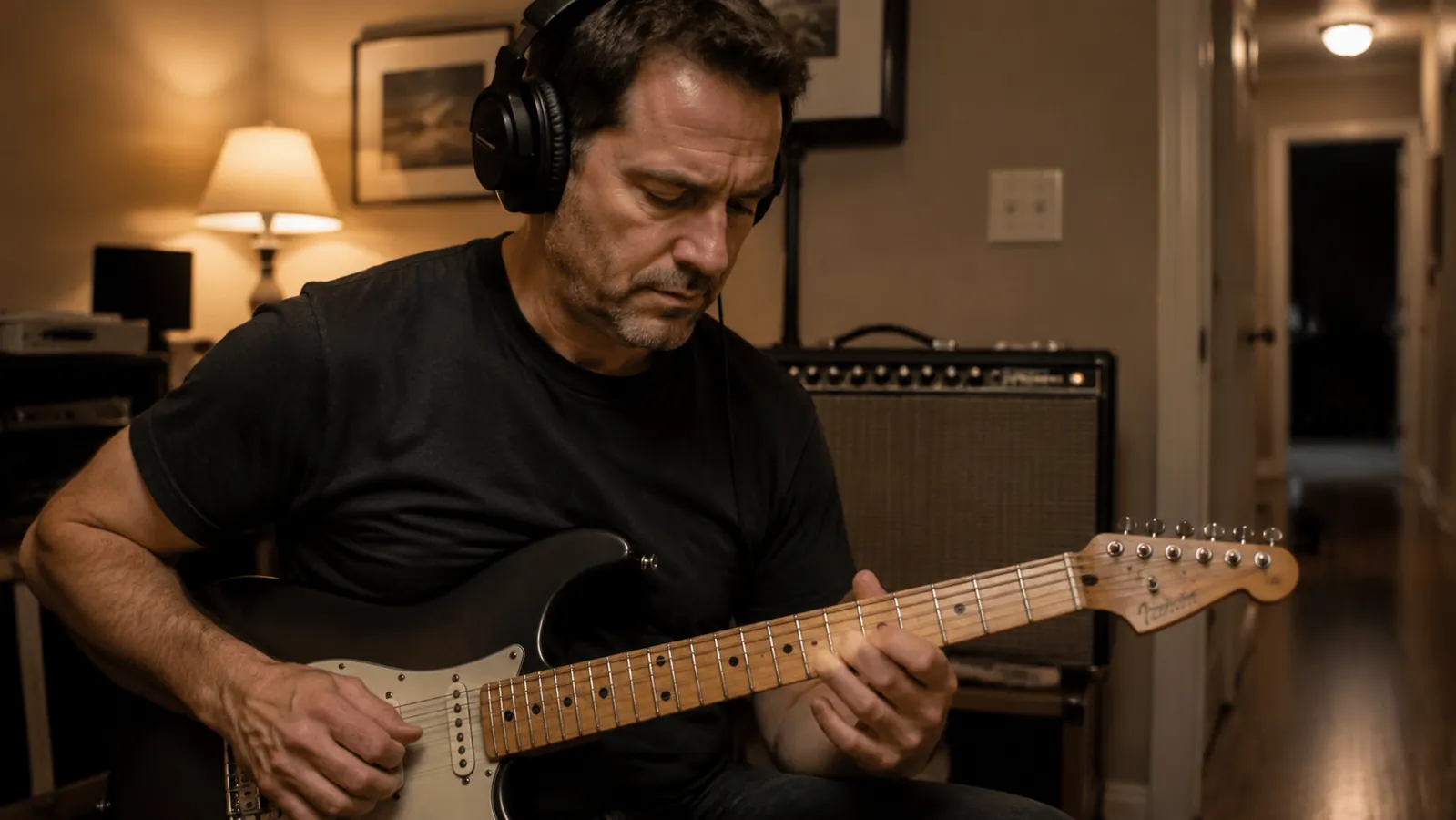
If you have spent more than ten minutes on a recording gear forum, you have seen this debate. The Audio-Technica ATH-M50x against the Sony MDR-7506. Two headphones, both around $150, both everywhere in studios, both with armies of loyal defenders. Most of the reviews you will find are written by mixing engineers who spend their days obsessing over hi-hat transients and vocal sibilance. I am not that guy. I am a guitarist. I have been running guitar signals, amp sims, and DI tones through both of these headphones for the better part of three years, and the choice looks completely different from where I sit.
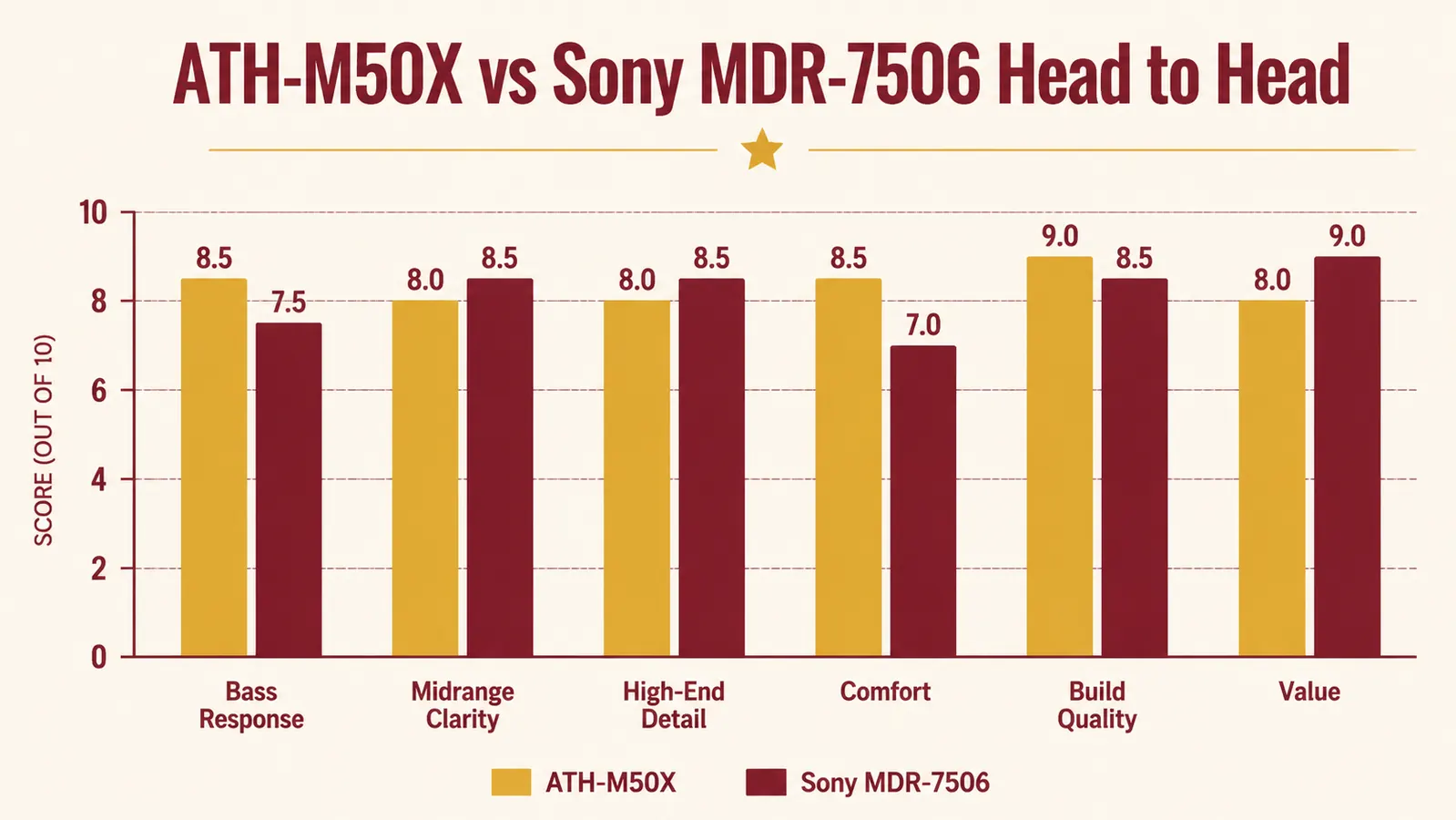
Short answer: the ATH-M50x wins for guitar players. The low-end response that mixing engineers sometimes complain about is actually the reason guitarists should want it. Guitar and bass live between 80Hz and 5kHz. You need a headphone that tells you the truth about that range, not one optimized to make a snare drum pop at 10kHz. But the 7506 is not a bad choice either. It has real advantages in specific situations. Here is the full breakdown.
| Spec | ATH-M50x (Left) | Sony MDR-7506 (Right) |
|---|---|---|
| Current Price | ~$159 | ~$100 |
| Driver Size | 45mm | 40mm |
| Frequency Response | 15Hz to 28kHz | 10Hz to 20kHz |
| Impedance | 38 ohms | 63 ohms |
| Sensitivity | 99 dB/mW | 106 dB/mW |
| Cable | Detachable (3 cables included) | Coiled, fixed |
| Folding Design | Yes, 3-axis | Yes, folds flat |
| Low-End Presence | Elevated, musical | Flat, neutral |
| Clamp Force | Firm (breaks in over time) | Light |
| Best For | Guitar/bass monitoring, amp sims | Vocals, acoustic, reference mixing |
Where the ATH-M50x Wins for Guitar Players
The M50x has a V-shaped frequency response. That means the lows and the highs are pushed up relative to the midrange. Some reviewers say this like it is a flaw. For guitarists monitoring their own playing, it is a feature. When I run my Strat through a Neural DSP Archetype plugin and track the low-E string, the M50x tells me clearly whether I have got enough body in the low mids. The 7506 tends to sound a little thin in the same test. You hear the attack fine, but the weight of the string, the thing that makes a riff feel physical and planted, comes through more honestly on the M50x.
The 45mm drivers are the bigger part of the story. Bigger drivers move more air in the low-frequency range. When you are tracking a bass part or listening to how your guitar sits against a reference track, a driver that can actually represent 80Hz to 200Hz accurately is not a luxury item. It is what tells you whether your tone is muddy or just warm. I have caught low-mid buildup on takes that I would have missed completely on the 7506. That saves time. That saves mixes.
The detachable cable is the other win that nobody leads with but everybody appreciates six months in. The 7506 has a coiled fixed cable that attaches at the headphone itself and terminates in a coiled cord. It is fine until the cable starts to fray at the strain relief point, which happens to most 7506 owners within two or three years of regular use. The M50x comes with three cables: a coiled cable, a straight 1.2m cable, and a long straight 3m cable. When one goes, you buy a replacement for a few dollars. You do not replace the whole headphone.
Your amp sim sounds better than you think. You just need headphones that can actually show you.
The ATH-M50x is the headphone I reach for every time I track guitar at home. 33,000-plus Amazon reviews from real users. Check today's price before it moves.
Amazon Check Today's Price on Amazon →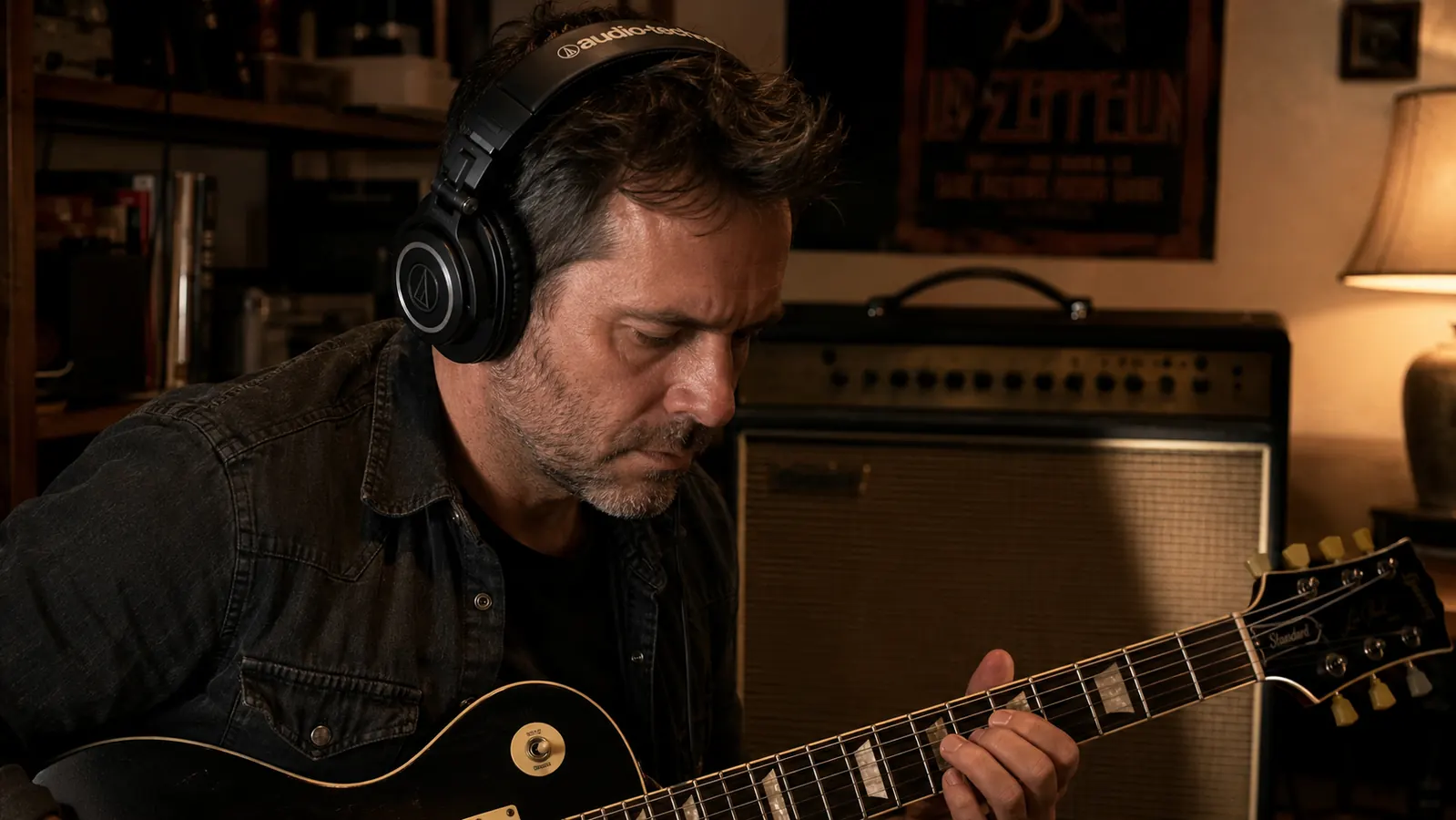
Where the Sony MDR-7506 Wins
The 7506 is flatter in the midrange. If you are doing any vocal recording or acoustic guitar work alongside your electric tracks, that neutrality is actually useful. The M50x's elevated highs can make acoustic guitar sound a little brittle when you are using it as a reference playback tool. The 7506 gets out of the way and lets you hear the source. For anybody who does a mix of instrument tracking and vocal production in the same session, the 7506 is a legitimate choice.
Clamp force is the other area where the 7506 has a real edge. The M50x has a firm initial clamp. Most people find it loosens after 20 to 30 hours of use. But if you are doing two, three-hour sessions in a row, the M50x can become genuinely uncomfortable on the sides of your head before the pads break in. The 7506 is lighter and has a softer clamp from day one. If you are prone to headaches from headphone pressure, that is a meaningful difference, not a cosmetic one.
The 7506 sounds neutral. The M50x sounds like guitar. Those are not the same thing, and for a guitarist, that distinction matters more than any spec sheet.
Amp-Sim Accuracy: Which One Tells You the Truth
This is the test that actually matters for bedroom guitarists who run amp sims through an interface. I spent about four weeks going back and forth between the two headphones while monitoring Helix Native and the free Amplitube Custom Shop. The M50x's elevated low-end initially made the gain sounds feel more lush and produced. The 7506's flatter curve made high-gain patches sound a little thin and harsh. When I took those same patches and monitored them through my studio monitors, the M50x representation was closer to what the speakers produced. The 7506 was making patches sound better engineered than they were.
That is a real problem if you use headphones to dial in amp-sim settings and then play through speakers at rehearsal. You want your headphone monitoring to be as close to your real playback environment as possible. The M50x, despite its V-shape reputation, actually translates better to small speaker systems in my experience. The 7506 optimizes for flat response in a way that makes it excellent for mastering but misleading for tracking.
Build Quality and Long-Term Durability
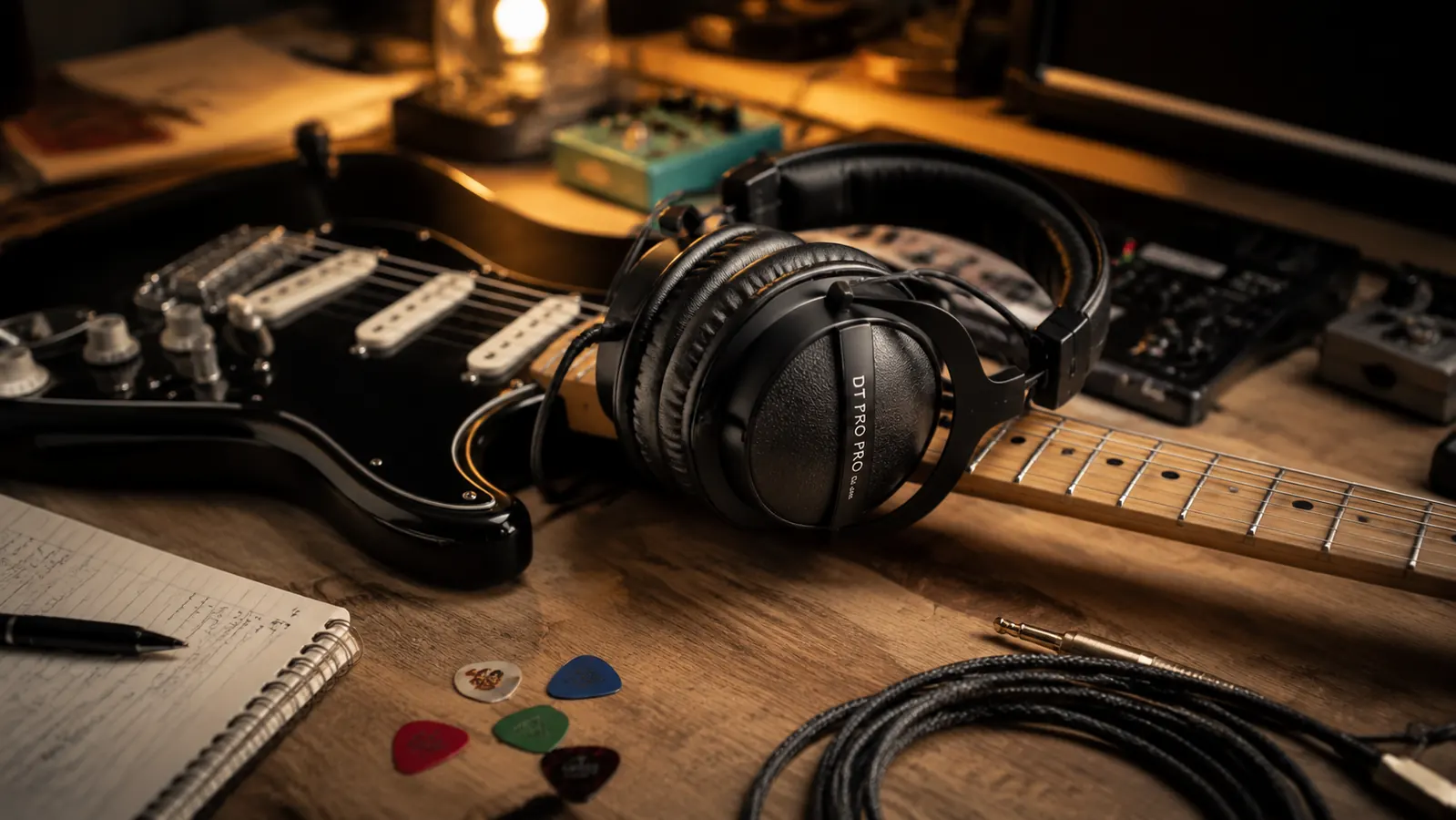
Both headphones are built solidly for their price point. The M50x uses a matte plastic body with metal hinges and a padded headband. The hinges rotate three ways, so the cups fold flat and fold back. I have owned my current pair for three years. The headband has not cracked, the hinges have not loosened, and the ear pads are the same ones that came on the headphone, though they are starting to show wear. Replacement pads from Audio-Technica run about $25 and take five minutes to swap.
The 7506 is made from lighter plastic. It feels a bit more fragile in the hand but has a long track record in broadcast environments, which are hard on gear. The coiled cable is the weak point. The strain relief at the plug end is not as robust as it should be for a cable that gets wrapped and unwrapped daily. If you use your headphones in a fixed studio environment where the cable just sits there, this is less of an issue. If you carry them back and forth to rehearsal, it becomes a problem faster.
Who Should Buy Which
Buy the ATH-M50x if: you are primarily a guitarist or bassist using these for silent practice through an amp sim, you track multiple instruments and want a single headphone that does not lie about the low end, you travel with your gear and need a rugged headphone with a replaceable cable, or you want a single pair that works for tracking, reference listening, and occasional mixing on one purchase.
Consider the Sony MDR-7506 if: you do a lot of vocal or acoustic guitar recording where flat midrange accuracy is the priority, you have a physically sensitive head and cannot tolerate firm clamp force even after break-in, or you already own a decent pair of monitoring speakers and want a secondary headphone purely for quick reference checks rather than extended tracking sessions.
The 7506 is not a bad headphone. It has been in professional studios for 30 years for a reason. But it was designed to be a broadcast monitoring tool, not a guitar player's tracking companion. The M50x, whatever you want to say about its V-shaped EQ curve, was designed to represent a wide variety of sources accurately in a portable form. For guitar players, that distinction ends up mattering every single time you plug in. I keep the M50x on my desk. The 7506 sits in a drawer, pulled out when I am doing a quick vocal check. That is how I really use them after three years.
Three years of guitar sessions have not changed my answer: the M50x is the one to own.
The Audio-Technica ATH-M50x has a 4.7-star rating from over 33,000 Amazon customers. Detachable cable, 45mm drivers, three years of proven durability in my own studio. Check today's price while it is in stock.
Amazon Check Today's Price on Amazon →