
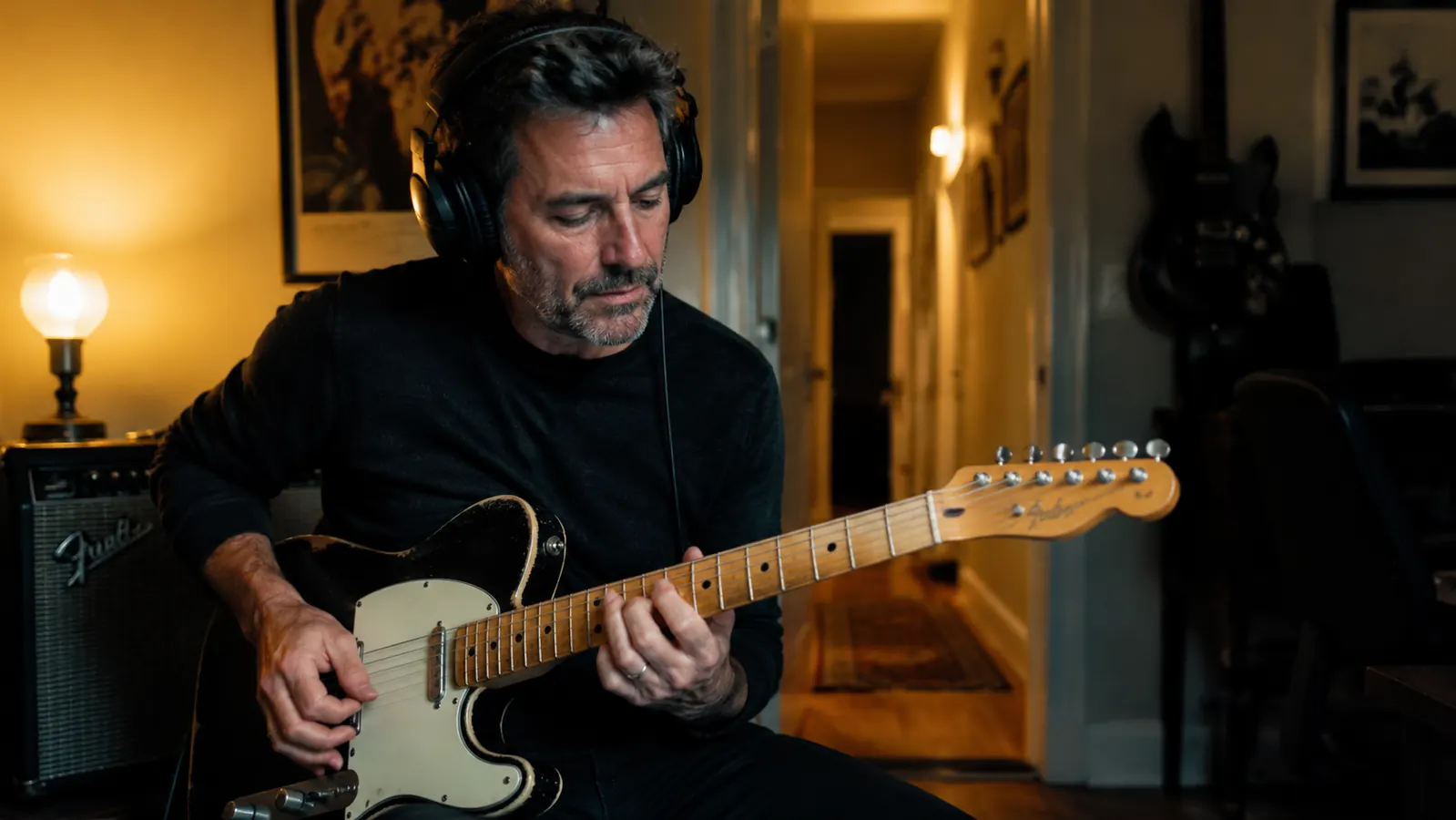
Three years ago my neighbor knocked on the door at 10:45pm and asked, politely but firmly, if I was going to be done soon. I had my Marshall half-stack running at what I thought was a reasonable bedroom volume. She had a different opinion. That conversation sent me down a rabbit hole of silent-practice solutions, and at the end of it I bought a pair of Audio-Technica ATH-M50x headphones. I have played through them almost every single night since. That is somewhere north of a thousand sessions. I have also used them for reference monitoring when mixing demos in my home studio, tracked through them when my monitors were being repaired, and put replacement pads on them twice. If you want to know what these headphones actually feel like after real use, by an actual guitarist rather than a headphone reviewer who plugged in some jazz piano for twenty minutes, keep reading.
The ATH-M50x is a professional studio monitor headphone built for engineers, broadcast professionals, and tracking musicians. Audio-Technica has been selling variations of the M50 platform since 2007. The M50x added the detachable cable system around 2014. At current pricing, it sits squarely in the serious-but-not-boutique tier alongside the Sony MDR-7506 and Beyerdynamic DT 770 Pro. It is not cheap enough to be an impulse buy and not expensive enough to require a dedicated headphone amp. For a gigging guitarist looking to practice silently, that price point is exactly where you want to land.
The Quick Verdict
The best all-around headphone a working guitarist can own for silent practice and home recording reference, with one real comfort caveat for sessions longer than two hours.
Amazon Check Today's Price →Still practicing through crummy earbuds? Your tone deserves better than that.
The ATH-M50x is the studio headphone that 33,000+ Amazon reviewers agree on. Check current pricing before the next size-up.
Amazon Check Today's Price on Amazon →How I Have Used These for Three Years
My setup for silent practice is a Telecaster into a Focusrite Scarlett 2i2, running Neural DSP Archetype: Cory Wong for clean tones and the Tone King Imperial plugin when I want something warmer. The ATH-M50x sits between the interface output and my ears. That is the chain. I do not run effects hardware in the signal path because the latency on most budget multi-effects units is noticeable through headphones in a way it never is through a real speaker. Headphones are brutally honest about latency.
For recording reference, I use the M50x to check mixes after I have done the bulk of the work on my KRK Rokit 5 monitors. The headphones catch things the monitors smear, particularly hi-hat bleed and low-frequency mud that builds up in a room with imperfect treatment. They also give me a gut check on whether a mix will translate to consumer earbuds, which have a similar V-shaped frequency response curve. That last point is important and I will come back to it.
Clamp Force: The Thing Nobody Warns You About Adequately
Out of the box, the ATH-M50x has a clamp force that I would describe as aggressive. These are closed-back headphones designed to stay on your head while you move around a studio. The clamping is intentional. For the first three months, sessions longer than ninety minutes left my temples sore. I tried the common fix: hang them over a large textbook stack for 48 hours to stretch the headband. It helped. After about six months of regular use the pads also compressed slightly, which softened the pressure. If you have a larger head or wear glasses, plan for a break-in period of at least four to six weeks before the fit becomes genuinely comfortable for extended sessions.
By year two the clamp force was a non-issue. The pads had molded to the shape of my head and the headband had relaxed. Current sessions run three to three and a half hours without discomfort. If you cannot wait for break-in, the aftermarket pad market for the M50x is well-developed. I replaced the stock protein leather pads with Brainwavz angled memory foam pads at the two-year mark. The angled design changed the soundstage slightly and reduced the bass response a small amount, which I actually preferred for mixing. For pure monitoring and practice the stock pads are fine once they soften.
The Cable-Detach Mod That Changed Everything
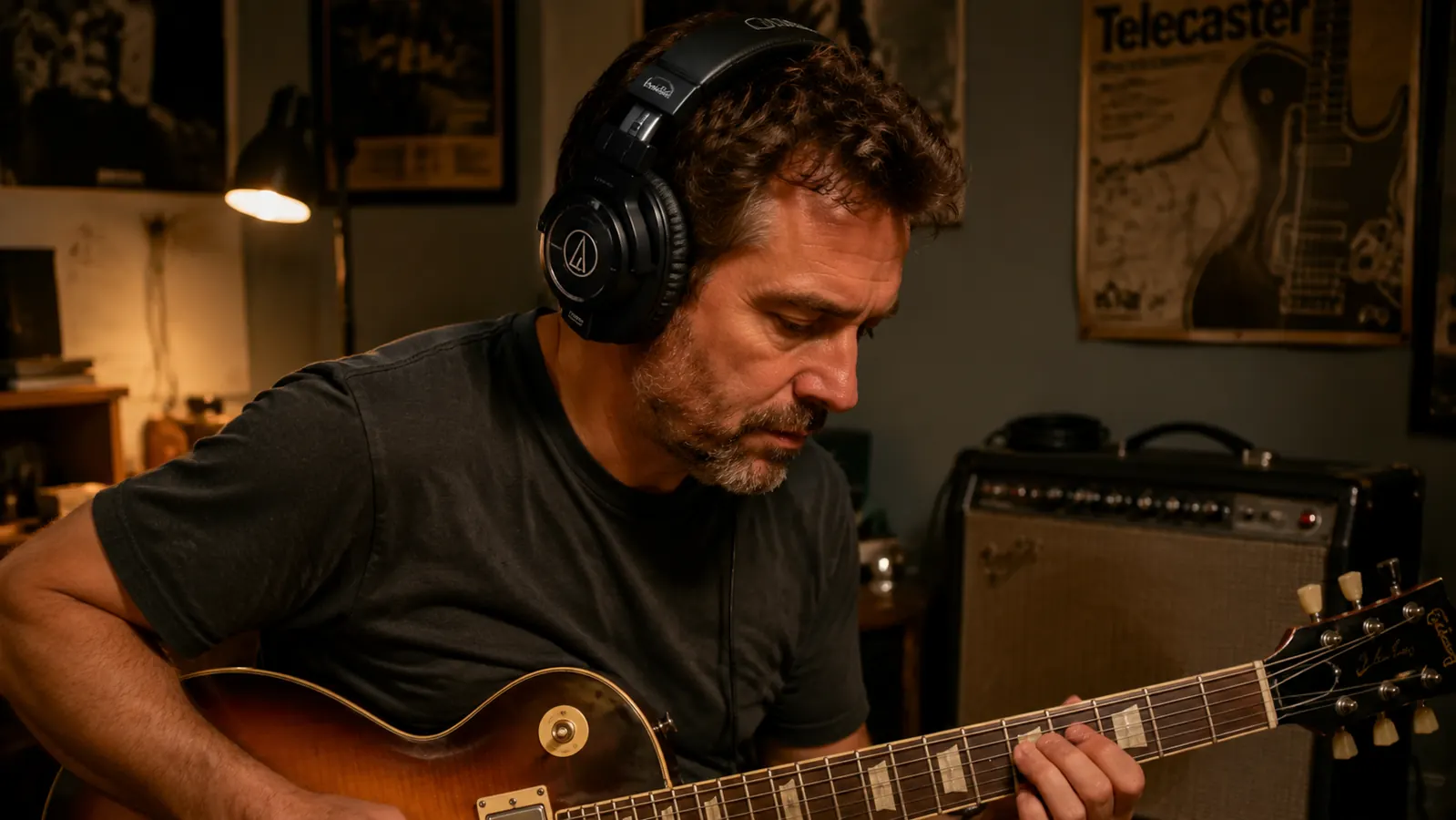
The stock straight cable that ships with the ATH-M50x is about nine feet long. In a practice setup where your interface sits on a desk twelve inches from your body, that cable is a constant nuisance. It drapes across your lap, catches on your knee, pulls the plug out of the interface when you shift in your chair. The first thing I did was swap the stock cable for a Globalsound 1.2m straight replacement cable. Costs about twelve dollars. The detachable cable system on the M50x uses a standard 2.5mm connector on the headphone side, which is a widely supported format. Do this immediately. Do not bother using the stock straight cable for desk-based guitar work.
The coiled cable that also ships in the box is better for standing practice or moving around the room, but it has a tendency to tug at the headphone when it reaches maximum extension. For seated practice the short straight replacement is the answer. After three years, I now keep the short cable on by default and the stock coiled cable in the original box, untouched. The 2.5mm connector has not shown any wear issues on my unit despite daily unplugging and replugging.
How They Handle Guitar Tone: The Palm-Muted Low-E Test
Most headphone reviews test with jazz or classical. Neither of those tells you anything about how a headphone handles a low-E palm mute played through a high-gain amp simulation. That transient, that thud with the trailing distortion bloom, is the hardest thing to get right in headphone monitoring for metal and hard rock. Lesser headphones either exaggerate the low end into a woofy mess or compress the transient into something thin and spongy. The M50x handles it cleanly. The 45mm large-aperture driver has enough physical size to render the low-E fundamental without the cab emulation collapsing into mud. You get the thump. You get the separation between strings in a power chord. You can actually hear when your palm mute is inconsistent, which is the whole point.
The mid-range on the M50x is slightly recessed compared to a flat reference monitor, which is a documented characteristic of the V-shaped tuning Audio-Technica chose. For guitar practice this is not a serious problem. For mixing it means you have to mentally compensate for the fact that mids will sound slightly more prominent on most playback systems than they do through these headphones. I have mixed four full demo recordings on the M50x and all four translated reasonably well to external speakers, but I always send the mix through my monitors for a final check before calling it done. The headphones alone are not sufficient for professional mixing decisions, but for demo work and practice reference they are very usable.
You can actually hear when your palm mute is inconsistent through these headphones. That kind of honest feedback is the whole point of monitoring-grade cans for practice.
Why Mixes Done on the M50x Translate
The conventional wisdom is that the M50x is too hyped in the bass and treble to be reliable for mixing. That is partially true. But there is a counterargument that experienced home engineers have been making for years: the M50x's frequency curve is not far from the curve of the Apple AirPods and Samsung earbuds that most listeners use every day. If your mix sounds good on the M50x and also sounds good on your monitors, it almost certainly sounds good on every consumer playback device your audience is using. Think of the M50x as a consumer-ear sanity check rather than a reference tool. When I use it that way, it works.
The soundstage is narrow by design. Closed-back headphones collapse the stereo field inward compared to open-back designs. For guitar practice, narrow soundstage is actually fine. You are not trying to place instruments in a three-dimensional mix. You are listening to your own tone, your technique, and whether your timing is solid. The M50x is more than accurate enough for that purpose. The closed-back design also provides meaningful isolation from room noise, which matters when the rest of the household is watching television in the next room.
Replacement Pads: When and What to Buy
The stock protein leather pads on the M50x began flaking at around the eighteen-month mark. This is a known issue and it is not specific to Audio-Technica. Protein leather on any headphone degrades with sweat and body heat over time. The flaking is cosmetic at first, then structural. By month twenty the pads had lost enough padding that the isolation suffered noticeably. I ordered Brainwavz HM5 angled pads for the first replacement. They fit the M50x without modification and they use genuine leather rather than protein leather, so they have held up better. At the three-year mark I have done one additional replacement. Budget for pad replacement every twelve to eighteen months if you are doing daily sessions. It is a normal maintenance item, not a quality failure.
Replacement pads for the M50x run between fifteen and forty dollars depending on material and brand. Brainwavz, Dekoni, and the official Audio-Technica replacement pads are all worth considering. The Dekoni fenestrated sheepskin pads are expensive but genuinely excellent if you want maximum comfort for long sessions. I have not tried them personally but several people in the recording forums I follow swear by them for studio work. The M50x's broad aftermarket support is a meaningful advantage over headphones with proprietary attachment systems.
What I Liked
- Excellent low-frequency definition for guitar palm mutes and power chords
- Detachable 2.5mm cable system accepts affordable third-party replacements
- Closed-back design provides real isolation without background noise bleeding into your monitoring
- Well-supported aftermarket for pads, cables, and accessories
- Folds flat for storage and is durable enough for daily use over years
- Frequency curve translates reasonably well to consumer earbuds, useful for demo mixing
Where It Falls Short
- Clamp force is substantial out of the box, requires weeks of break-in for comfort
- Stock protein leather pads begin to flake between 12-18 months of daily use
- V-shaped EQ curve means mids are slightly recessed, not ideal as a solo mixing reference
- Narrow soundstage is inherent to closed-back design, limits stereo imaging accuracy
When You Should NOT Use the ATH-M50x
There are two scenarios where I reach for something else. The first is overhead drum monitoring. The M50x has solid isolation but the closed-back design creates a slight pumping sensation when monitoring loud drum hits, particularly kick drum transients. Drummers who track in headphones generally prefer open-back or semi-open designs for this reason. I am not a drummer, but I have sat in on sessions where the drummer was using the M50x and every one of them eventually switched to a different can within a few takes.
The second scenario is monitoring guitar through a real amplifier at high volume. If you are gigging with an in-ear monitor setup and you need to hear your amp on stage, the M50x is not built for in-ear monitor use. The 3.5mm TRS connector and the over-ear design are studio tools. For stage monitoring you want dedicated IEMs with a proper fit and seal. The M50x also has a moderate sensitivity rating at 99dB, which means it will get loud enough from a standard interface output, but it is not the ideal choice for high-SPL monitoring environments. It will not damage the driver, but the design was not optimized for stage levels.
Who This Is For
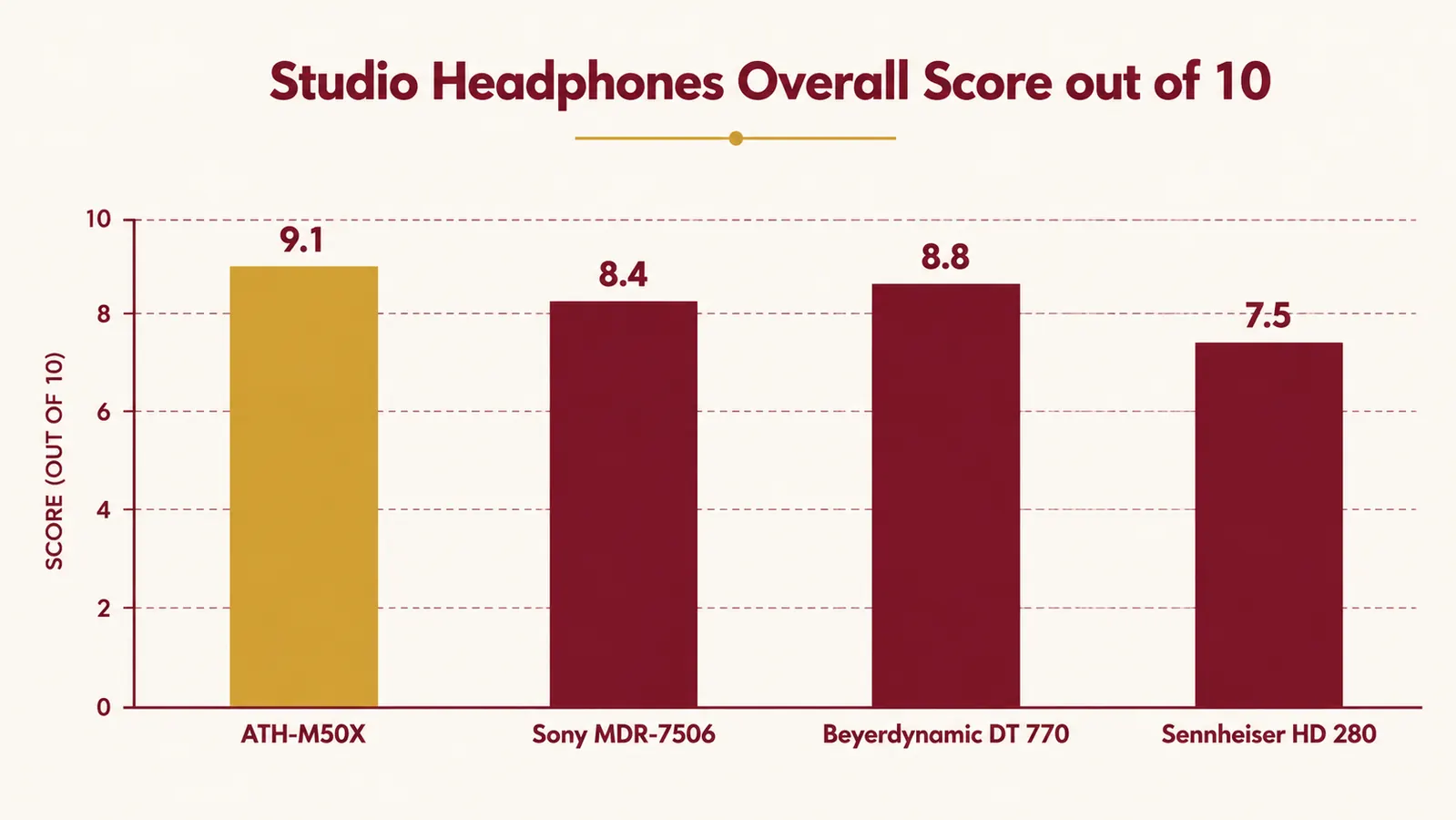
The ATH-M50x is the right choice for any guitarist who practices regularly at home and needs a headphone solution that will hold up over years of real use. If you are running a guitar through an interface and amp sim software every night, or if you do home recording and need a monitoring reference that is more accurate than consumer headphones without requiring a dedicated headphone amp, this is the headphone. It is also a strong choice if you want one pair of headphones that can cover silent practice, home recording reference, and general music listening. The sound quality for casual listening is genuinely excellent, far better than you would expect from a headphone positioned as a studio tool. For a deeper comparison against its main competitor, see my breakdown of the ATH-M50x vs Sony MDR-7506.
Who Should Skip It
If you have a large head or wear thick-framed glasses, the clamp force out of the box may be genuinely uncomfortable and the break-in period may take longer than you are willing to wait. In that case, look at the Audio-Technica ATH-M40x, which has a lighter clamp force and a flatter frequency response at a lower price, or the Beyerdynamic DT 770 Pro in the 250-ohm version, which pairs well with a basic headphone amp and has a more generous fit. Also skip the M50x if your primary concern is open-back soundstage accuracy for mixing. For that use case, an open-back headphone like the Sennheiser HD 600 or Beyerdynamic DT 990 Pro will serve you better, though you will lose the isolation that makes silent practice viable. If you want to know all the specific reasons the M50x works so well for guitarists specifically, I laid out ten of them in this article about why the ATH-M50x works for guitar practice.
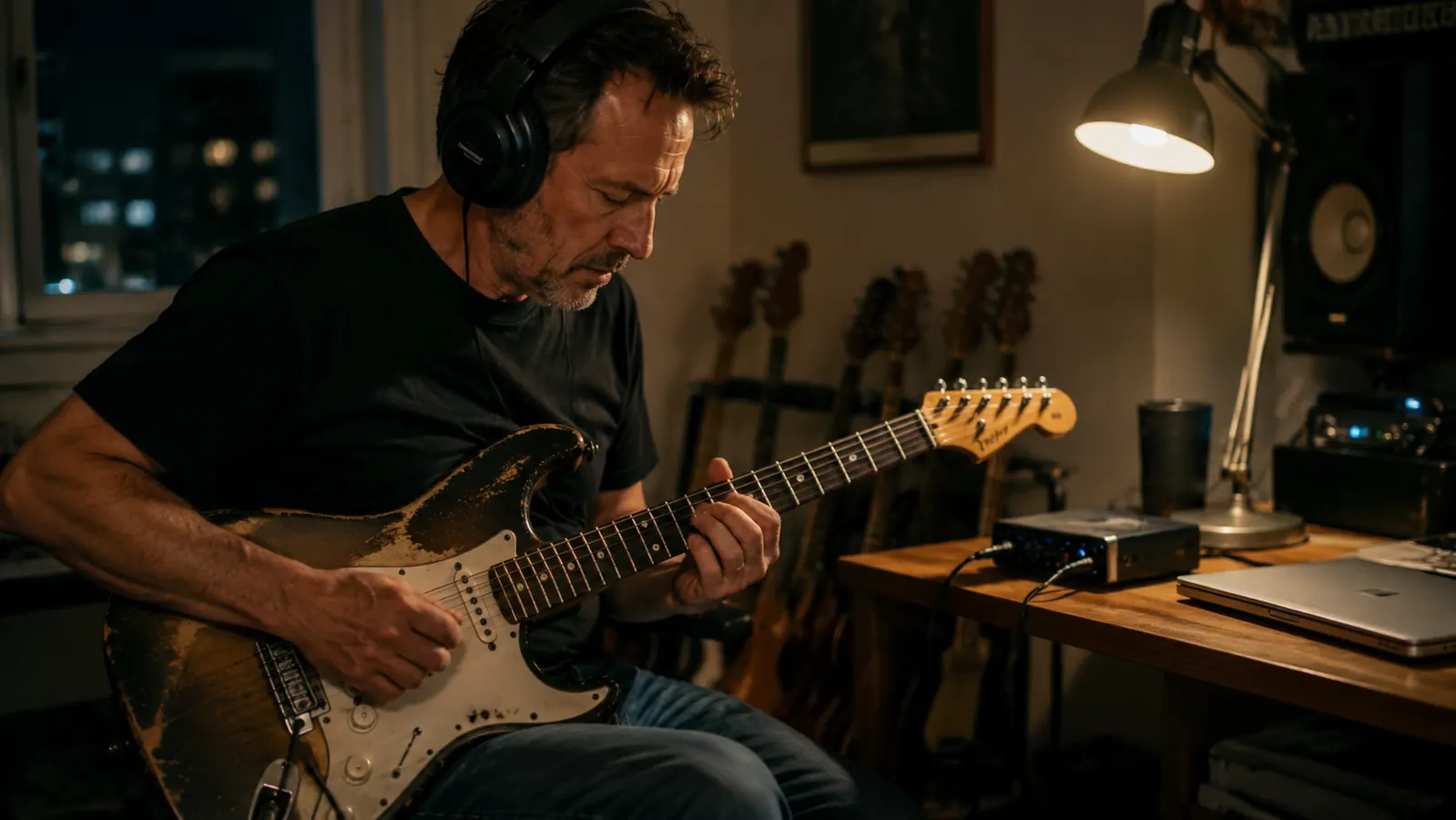
Three years in and I still reach for these every night. That tells you everything.
The ATH-M50x consistently ranks among the top studio headphones under $200 and has the owner loyalty numbers to back it up. If you are done borrowing your partner's earbuds to check your mixes, this is the upgrade.
Amazon Check Today's Price on Amazon →